Artificial Intelligence Is Already Transforming Power Systems
When we hear about AI in energy, it can sound like a vision of the future. In fact, these technologies are already being used systematically to address practical engineering problems.
Here are several areas in which AI currently supports energy professionals.
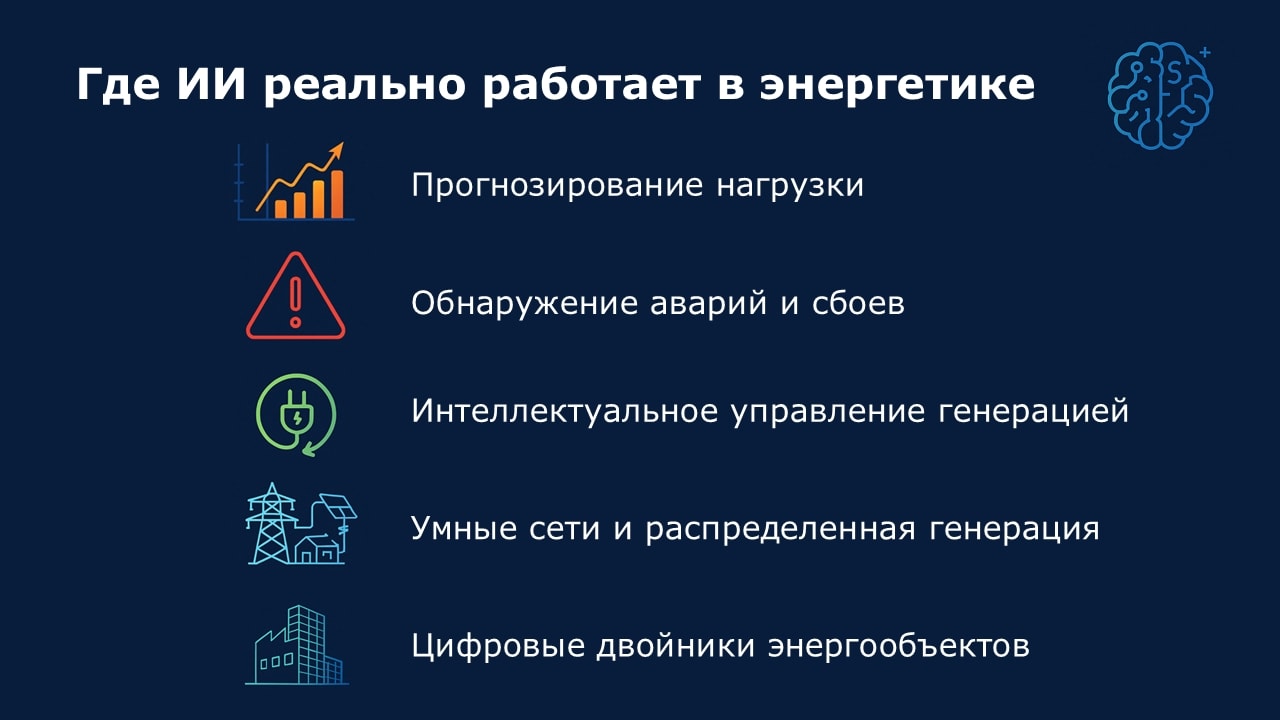
Load forecasting.
AI analyses hundreds of parameters, from temperature to consumption patterns across the days of the week, and builds predictive models of how much electricity will be needed tomorrow.
The result can be lower reserve requirements, reduced losses and greater system resilience.
Fault and failure detection.
AI systems analyse equipment behaviour, detect unusual signals, compare them with known anomalies and raise an early alert.
The objective is to prevent problems, rather than simply respond to them.
Intelligent generation control.
AI algorithms help adjust power output in real time, increasing generation where necessary and balancing it elsewhere while accounting for weather data, demand and even market conditions.
Smart grids and distributed generation.
AI helps coordinate flexible energy systems, including electric vehicles, energy storage, renewable generation and smart homes.
These components can operate as an integrated system with limited direct human intervention.
Digital twins of energy facilities.
AI supports the development of accurate virtual models of real assets such as substations, turbines and networks.
These models allow engineers to test operating conditions, predict deterioration and train new specialists.
Our AI in Power Engineering master's programme does not treat artificial intelligence as an abstract concept. We teach students to apply it to real engineering challenges. This is no longer only the future: it is part of today's profession.