🌊 When a Major Hydropower Plant Is Halted Not by Technology, but by Environmental Concerns
Large power plants are often assessed primarily in quantitative terms: installed capacity, electricity generation, project costs, and construction schedules. However, energy infrastructure also has another important dimension — its environmental impact.
One notable example is the development of hydropower projects on the Jinsha River in China. The Jinsha is the upper reach of the Yangtze River, where a large cascade of major hydropower plants has been under construction.
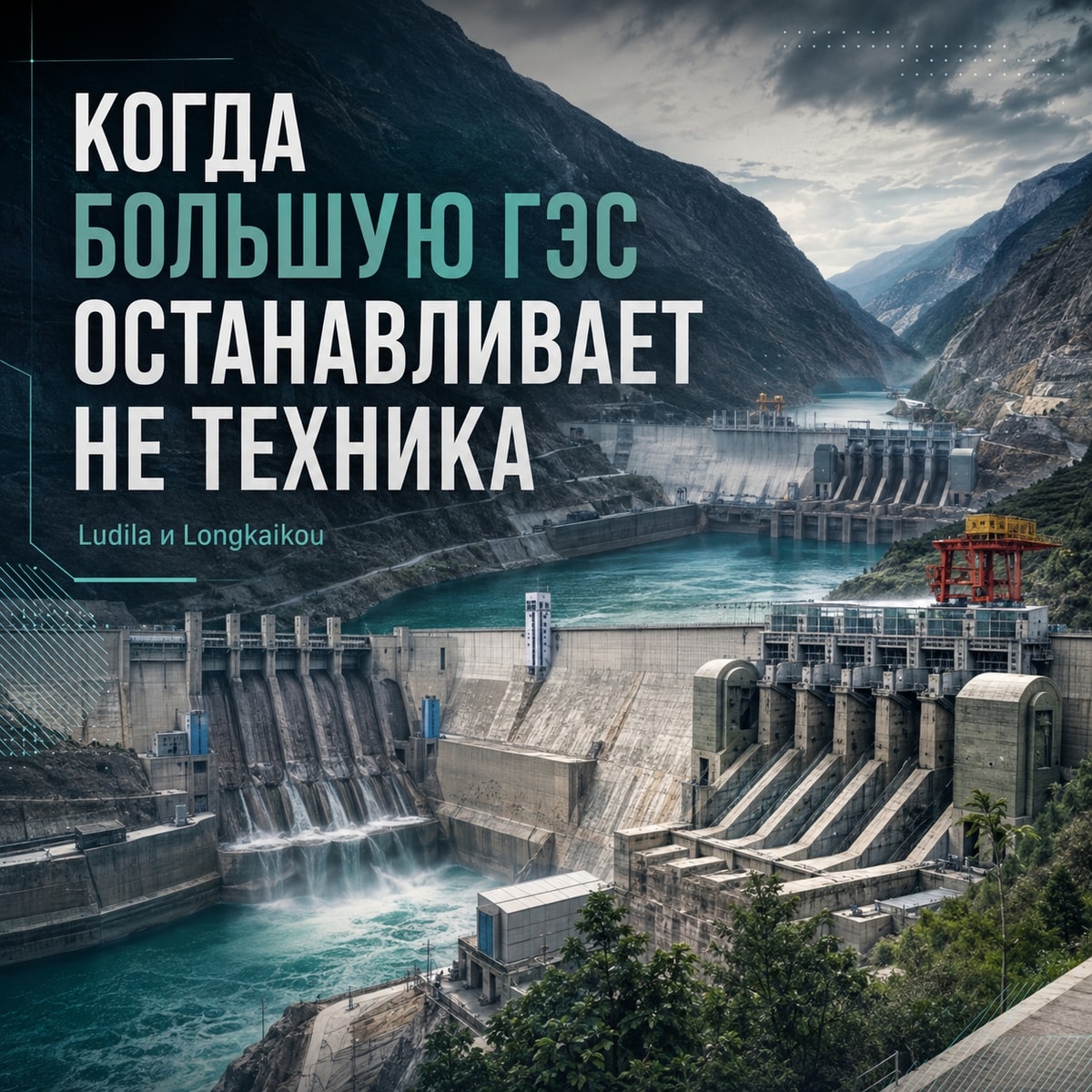
⚡ Among these facilities are the Ludila and Longkaikou hydropower plants. These are not small-scale local projects, but major hydroelectric facilities located in a mountainous river valley, involving dams, reservoirs, spillways, transmission lines, and extensive supporting infrastructure.
In 2009, these projects became a significant example of the importance of environmental regulation in large-scale energy development: construction of their main facilities had to be suspended due to concerns related to environmental assessment procedures. The issue was not whether the plants could be built from a technical perspective. Rather, it concerned the broader consequences of large hydropower development, since a major dam can alter river dynamics, flood regimes, ecosystems, and the conditions of territories located both upstream and downstream.
🔍 This example demonstrates that energy projects cannot be evaluated solely in terms of megawatts. Even technologically advanced and high-capacity facilities must take into account environmental considerations, safety, infrastructure impacts, and the long-term consequences for the surrounding region.
💡 Modern energy engineering is therefore not limited to the construction of individual facilities. It requires a systems-level understanding of the relationships between technology, the natural environment, economics, society, and territorial development. For future energy professionals, it is important to understand not only equipment and power-system operating conditions, but also how engineering decisions affect the environment and society.