AI Master’s Admissions: Three Common Myths Explained
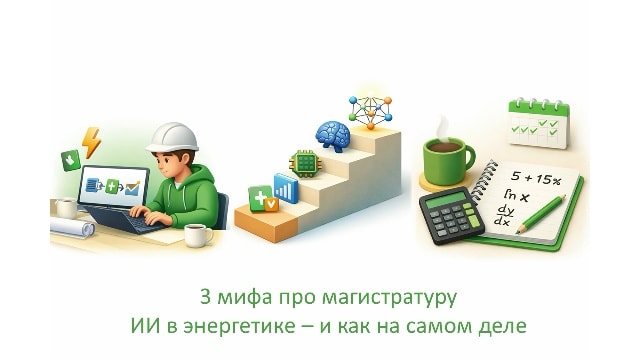
Myth 1: 'I'm not a programmer, so I cannot apply.'
In practice, this master's programme is about applied AI rather than software development alone. Motivated students with a foundation in mathematics and logic can learn programming during their studies.
Example: an engineer who can interpret graphs, understands technical processes and is prepared to learn Python can develop applied data skills for diagnostics, forecasting and operating-regime analysis.
Myth 2: 'I need to know everything about neural networks before I start.'
A foundation in logic, mathematical analysis, statistics and problem-solving matters more. Neural networks are tools that students learn to use during the programme.
Example: you can begin with straightforward methods such as regression and decision trees before moving on to more complex models.
Myth 3: 'I will not manage without advanced mathematics.'
The programme does not require mathematics competition expertise. Consistent study, working through problems step by step, practising and asking questions are important.
How to prepare: review percentages, logarithms and derivatives, revisit basic statistics and start learning simple Python programming.